
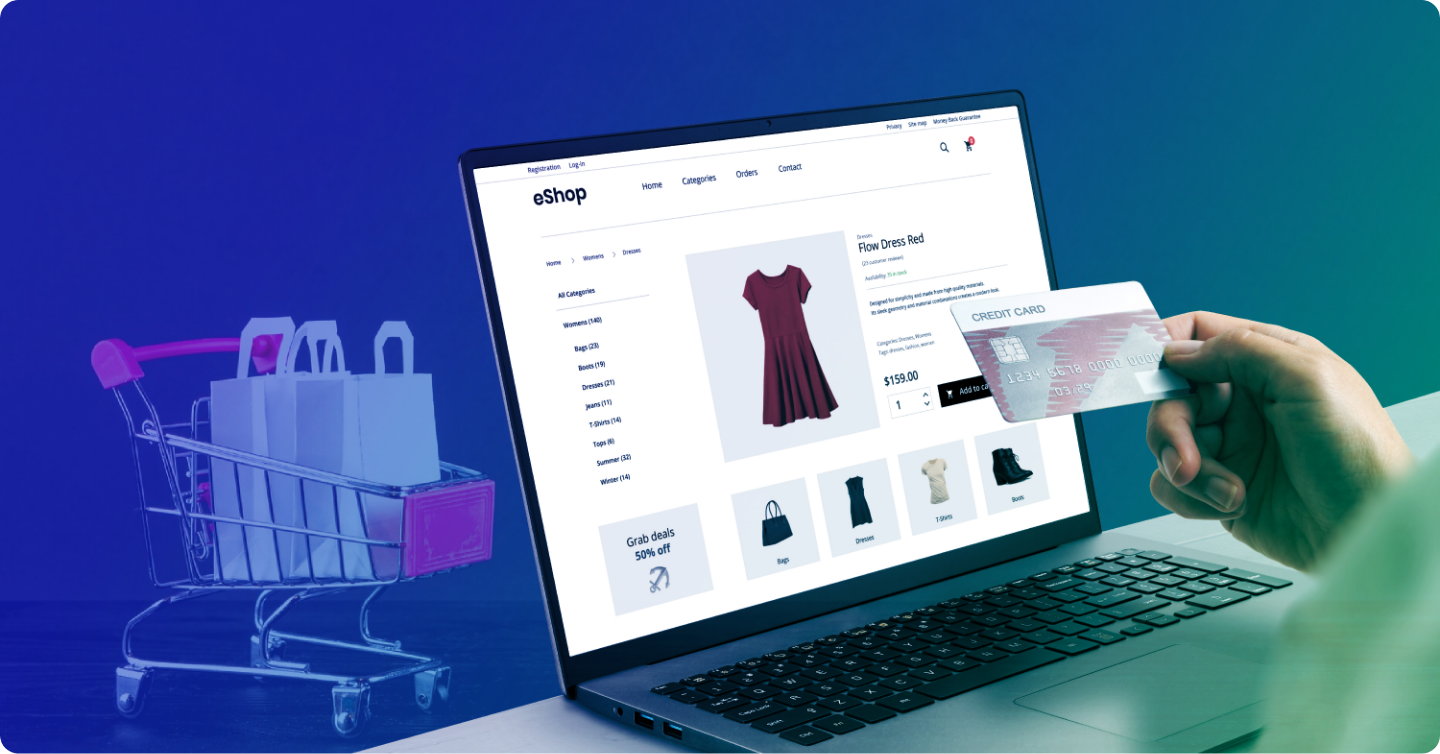

In order to succeed in e-commerce, one must outwit rivals and provide clients with a unique experience.
The adage “time is money” is as old as time itself. And one that is especially relevant in the fast-paced world of e-commerce today, where companies are constantly trying to keep up with the rapidly changing expectations and habits of their customers.
In order to succeed in e-commerce, you must outwit your rivals and provide your clients with a unique experience. However, if you are busy juggling price optimization on an hourly basis, filling out descriptor boxes and tags, or setting up that next sequential email campaign, you have very little time to think, plan, and implement creative ideas that could draw in more customers and create lifetime value.
Therefore, e-commerce professionals must also be adept at figuring out how to free up time so they can concentrate on the larger picture and business expansion.
AI can help with it.
The launch of “Generative AI” has generated a lot of excitement because of OpenAI’s ChatGPT and Google’s Bard products, but as the dust settles and use cases surface, it’s becoming clear that there are immediate, useful AI applications for e-commerce.
In the coming years, generative AI can completely transform all facets of e-commerce. Before the field’s rapid advancements in 2023, Gartner’s 2022 AI Technology Maturity Curve projected that these tools would reach a production maturity level in two to five years. AI growth in the retail market is forecast to reach $57.8bn by 2030 from now at a compound annual growth rate of 41%.
But there are ways to deploy existing AI capabilities in the here and now to remove many of the routine tasks that occupy mental space, divert attention from problem-solving, and avoid employee disenchantment at being stuck on a hamster wheel. Just as industrial robots can shift big pallets in the warehouse, AI can carry out some heavy lifting in your online business.
The power of personalization
Customizing the buying experience is a primary priority for all retailers. When they shop, customers place a great value on being identified and given personalized offers, recommendations, and pertinent marketing information. According to a McKinsey study, 72% of consumers “expect the businesses they buy from to recognize them as individuals and know their interests.”
Recurring business and loyalty are more likely to result from demonstrating your understanding of each unique consumer and giving them a more customized experience. In order to create customized experiences, historical transaction data, on-site habits, and the information that customers voluntarily provide with consent are all crucial. However, there is a lot of data to gather, analyze, and use effectively. AI can extract meaningful data at speed to develop and help serve the right content at the right time.
For instance, post-purchase communication is an essential chance to foster loyalty. AI may create and deliver a “Thank you for your order!” message to a consumer. a customized checkout message that is specific to the items a consumer recently ordered. This eliminates a significant amount of manual labor.
AI can also be used to find and create client clusters for advertising campaigns. By looking through order data for shared traits or behaviors, an AI service can be instructed to find and compile a group of clients. For instance, a retailer might want to send a customized email containing deals to regular customers. “Customers who have placed at least 10 orders in the past 10 months” could be the selection criterion.
Help With Content Creation
And there’s the actual substance of the website. Finding the ideal images for a campaign or coming up with brief descriptions that will be personally relevant might keep an employee engaged for several hours.
Consumers are constantly curious about what’s “new,” whether it’s a new shirt color or fit, or the latest TV model’s performance specifications. It can be tedious to list and update product qualities depending on a product description, but AI features can automate this daily task. Such a feature can automatically generate a list of properties for the product based on the product description and identify which properties have already been saved so that staff members can quickly discover which features are new and promote them appropriately.
For increasing conversions and generating interest in a product line, images are crucial. Images may require an interesting piece of content, such as a blog post about the current “Tomato Girl Summer” fashion trend on TikTok.
I feel sorry for the poor designer who has to search through a huge database and media library for pictures to use on their page. AI is capable of analyzing submitted photographs, determining their content, and assigning a keyword. In addition to being saved as alt tags for improved search exposure, these keywords are saved as metadata that can be located using an admin search.
In addition to enhancing performance for the largest merchants, these and many more AI technologies can help level the playing field for smaller and mid-size businesses. Accessing these features doesn’t need a huge investment in a swelling proprietary tech stack — there are lower-cost ways of integrating AI applications and capabilities into your e-commerce operations via software as a service packages.
These tools can give employees their time back to work on bigger projects around personalization and delivering a best-in-class shopping experience.